Four pillars of advice value
Vanguard’s research identifies four key sources of value that financial advisors can provide:
1. Financial planning value: Helping clients achieve specific goals such as saving for retirement, managing debt, or planning for family needs.
2. Portfolio value: Building diversified, risk-appropriate, tax-aware investment portfolios tailored to each client’s situation.
3. Emotional value: Providing peace of mind and confidence, so clients feel secure about their financial future.
4. Time value: Freeing time for clients by handling complex financial tasks, so they can focus on what matters most to them.
What investors want most from financial advice
A July 2025 survey of more than 13,000 Vanguard investors found that “peace of mind” is the top reason people seek financial advice. While investment returns and financial planning remain important, the respondents value having a trusted financial professional watching their back. Time savings and ongoing support also rank highly among investor priorities.
“What sets advisory services apart is that the advisory process itself creates value, offering investors greater peace of mind,” said Paulo Costa, a senior behavioral economist with Vanguard Investment Strategy Group and a co-author of the research paper. “It’s not only about making smart investment choices. It’s also about having a trusted partner who monitors your progress, anticipates changes, and provides reassurance when uncertainty arises.”
Peace of mind is the most common reason people get financial advice
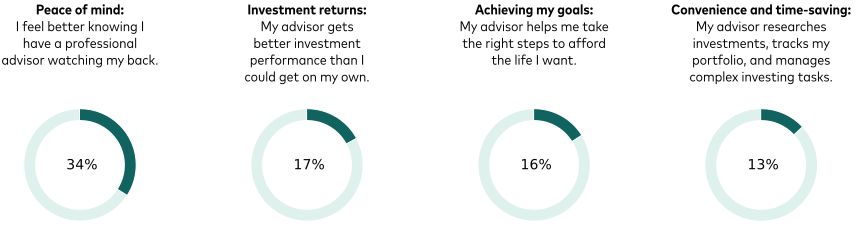
Notes: N = 12,070. The respondent sample includes both human-advised and digitally advised clients. Percentages represent the share of respondents selecting each reason.
Source: Vanguard.
Lessons for advisors—and anyone seeking financial advice
1. Every interaction builds peace of mind
Advice isn’t just about making adjustments to a client’s investment portfolio. It’s about being there when clients need help. Whether markets are volatile, life circumstances change, or new goals emerge, proactive monitoring and communication help clients feel supported and confident. Even behind-the-scenes tasks such as portfolio reviews or tax optimization add value when advisors share these efforts with clients.
2. Personalize advice, personalize communication
Every investor defines success differently. The most valuable advice is tailored not just to a client’s financial situation, but also to how each client thinks about progress and what matters most to the client. For some, success means reaching a financial goal by a specific retirement age; for others, it’s about flexibility, projected income, or leaving a legacy.
The strongest advisory relationships begin with a conversation about the client’s goals and preferences. By inviting clients to share what success looks like for them, advisors can select metrics and explanations that resonate, which helps clients feel confident and in control.
“Personalization isn’t just about the plan. It’s about speaking the client’s language,” said Min Kim, investment strategy analyst with Vanguard Investment Strategy Group and a co-author of the research paper. “Standard metrics work for many, but unique goals require tailored explanations. When value is framed in terms clients understand, advice becomes more meaningful.”
By making each client’s priorities the foundation of both their advice and their communication, advisors ensure their guidance is not just personalized, but truly relevant to clients’ lives.
3. Use clear, relevant metrics
Clients appreciate straightforward measures such as projected tax savings from a Roth conversion or projected retirement income. But no single metric fits everyone. Most clients prefer to see multiple ways of measuring progress such as projected income, performance, and probability of success. Advisors should start with simple, intuitive metrics and introduce more complex ones only as needed.
Emotional and time value: The intangibles that matter
Most clients report greater peace of mind and less financial stress when they work with an advisor, compared with doing it alone. Vanguard’s research shows that 86% of advised clients feel more at ease, and 76% spend less time worrying about their finances—saving, on average, two hours per week, which adds up to more than 100 hours per year.
The true value of advice
Financial advice delivers value in many forms—helping clients reach their goals, feel confident, and reclaim their time. The best advisors communicate this value clearly, using metrics that resonate with each client and adapting their approach to individual needs. Whether you’re an investor seeking guidance or an advisor looking to serve clients better, remember: The true value of advice goes far beyond investment returns. It’s also about peace of mind, personalized support, and making life simpler. Ultimately, advice empowers people to make confident decisions and live the life they want.